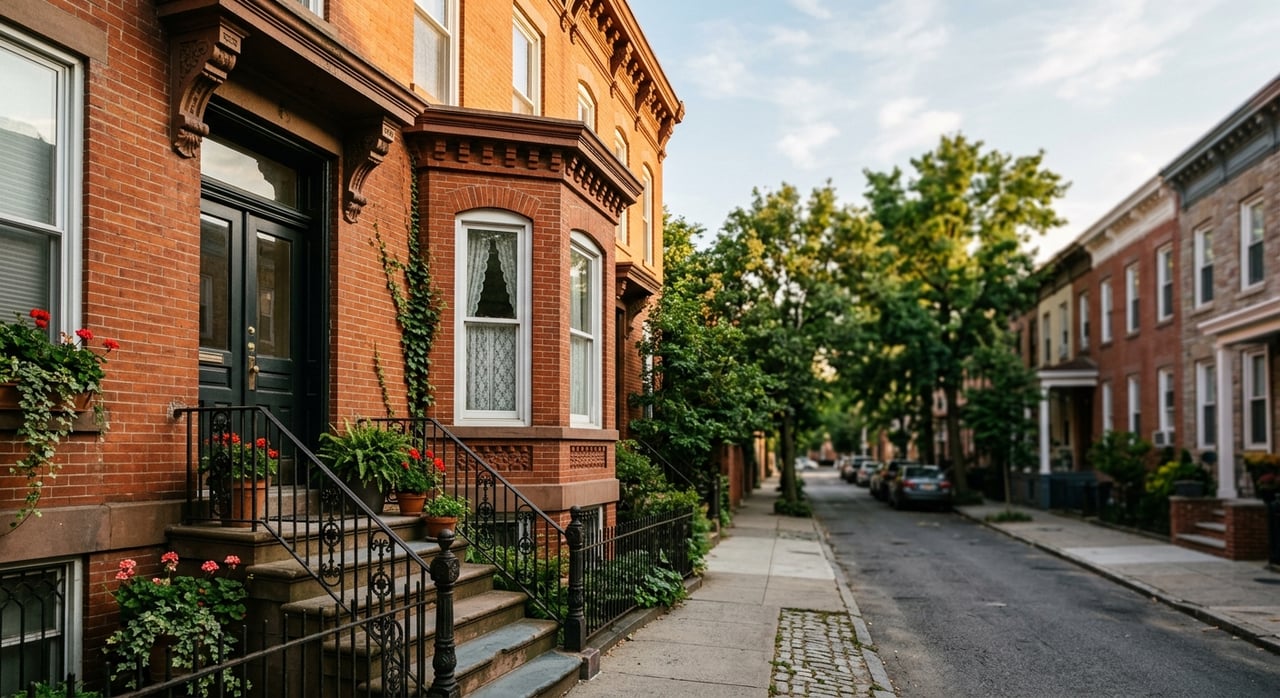
If you are trying to make sense of the Reading housing market, one fact stands out fast: this is not your typical detached-home suburb. Reading’s housing stock is older, more attached, and often more affordable than nearby markets, which can create real opportunities for buyers, sellers, and investors who know what to expect. In this guide, you’ll get a clear look at the home styles you are most likely to see in Reading, PA, how local price trends have changed, and what those numbers may mean for your next move. Let’s dive in.
Reading home styles at a glance
If you picture Reading as block after block of rowhomes, that impression is grounded in the data. According to the City of Reading’s 2024–2028 Consolidated Plan, 54% of housing units are 1-unit attached, making attached homes the city’s most common housing type.
That same report shows that Reading’s housing mix goes well beyond rowhomes. About 19% of units are 2 to 4 units, 10% are 1-unit detached, 10% are 5 to 19 units, and 7% are 20+ unit buildings. In simple terms, you are more likely to find attached homes, duplex-style properties, and small multifamily buildings than large numbers of detached suburban-style houses.
Rowhomes are the most common style
For many buyers, the most visible part of Reading’s housing stock is the rowhome. Because attached 1-unit housing makes up more than half of all units, many city blocks have a rowhouse-centered feel. That shape of inventory helps explain why Reading often feels very different from nearby suburban communities.
If you are shopping in the city, this matters for both lifestyle and budgeting. Attached homes may offer a lower entry point, but they can also come with older layouts, shared walls, and maintenance items that differ from what you might expect in newer suburban construction.
Small multifamily is a real part of supply
Reading also has a meaningful share of smaller multifamily properties. The city’s structure data shows a sizable portion of homes in the 2 to 4 unit category, along with additional units in larger multifamily buildings, which means duplexes and similar properties are a notable part of the local housing picture.
For an owner-occupant or investor, that can open up more options. You may find opportunities that fit buyers looking for flexibility, rental income potential, or a lower entry price than nearby suburbs. At the same time, the age and condition of these properties can vary widely, so careful review is important.
Detached homes are a smaller share
Detached single-family homes do exist in Reading, but they are a smaller slice of the city’s housing stock. The Consolidated Plan reports that only 10% of units are 1-unit detached, which is a big reason Reading should not be viewed as a standard detached-home market.
That does not mean detached homes are impossible to find. It simply means that if detached space is at the top of your wish list, you may need to be patient and stay realistic about how much inventory is available compared with attached homes and smaller multifamily properties.
Reading homes are older than many buyers expect
One of the biggest things to understand about Reading real estate is the age of the housing stock. The city’s Consolidated Plan says 69% of owner-occupied units and 52% of renter-occupied units were built before 1950. It also notes that the majority of homes were built before 1940, and more than 90% were built before 1980.
That age profile shapes the buying experience in a major way. Older homes can offer character, solid construction, and attractive price points, but they may also bring older systems, deferred maintenance, and more renovation needs than a newer home in the suburbs.
What older housing means for buyers
If you are buying in Reading, it is smart to go in with clear expectations. Older homes often call for more inspection diligence, especially when it comes to roofing, electrical, plumbing, windows, and heating systems.
The city data also supports greater awareness around lead-paint concerns. Since so much of Reading’s housing was built before 1950, buyers should be prepared for conversations about repair history, safety updates, and renovation costs as part of their due diligence.
What older housing means for investors
For investors, Reading’s older housing stock can create value-add potential, but it also raises the importance of realistic rehab planning. Entry prices may look attractive, yet older construction often means maintenance risk and renovation costs can add up faster than expected.
That is why local knowledge matters. When you understand the city’s common housing types and age profile, you can better evaluate whether a property fits your budget, timeline, and long-term goals.
Reading price trends have changed fast
Reading’s price story over the last several years has been dramatic. The city’s Consolidated Plan reports that the median sales price rose from $70,000 in 2019 to $120,000 in 2022, which shows just how much the market shifted during the pandemic-era run-up.
That jump helps explain why many buyers feel like the market changed quickly. Even if Reading still looks relatively affordable compared with nearby communities, it is a different market than it was just a few years ago.
Today’s market is still active
Current market snapshots suggest Reading remains competitive, even if price growth has become less straightforward. Zillow’s Reading home value data estimates a typical home value of $260,654, up 2.5% year over year, with 278 homes for sale, 106 new listings, and homes going pending in about 12 days.
At the same time, Redfin’s Reading housing market data reported a February 2026 median sale price of $185,000, down 1.8% year over year, with homes receiving about 4 offers on average and selling in around 23 days. These figures are based on different methods, so they should not be treated as identical price measures, but together they point to a market that is still moving.
Longer-term appreciation remains strong
If you zoom out beyond a single month or platform, the bigger trend is clear. The FHFA house price index summary tables show the Reading metro area was up 8.37% year over year and 62.71% over five years as of 2025 Q4.
That metro benchmark is not city-only data, but it still shows strong long-term appreciation across the broader Reading area. For buyers, that can reinforce the value of getting into the market with a smart plan. For sellers, it highlights how much pricing has shifted over the past several years.
Reading vs nearby suburbs on price
One of Reading’s biggest market advantages is its lower entry point compared with nearby boroughs and suburban areas. According to Redfin’s market data for Reading, the February 2026 median sale price was $185,000.
The same source reported West Reading at $256,000 and Wyomissing at $350,000. Based on those figures, West Reading was roughly 38% more expensive than Reading, while Wyomissing was roughly 89% more expensive.
What that price gap means for you
If you are focused on affordability, Reading may offer a more accessible starting point than some nearby markets. That can matter for first-time buyers, buyers looking for space on a tighter budget, or investors comparing purchase price to rental demand.
The tradeoff is that the lower price point often comes with older housing, attached-home inventory, and the need for closer property review. In other words, Reading can offer more approachable pricing, but success often depends on understanding exactly what you are buying.
Rent trends also matter in Reading
Reading is not just a buyer market story. It is also a renter-heavy city, and that plays a major role in housing demand. The city’s Consolidated Plan says the majority of households are renter-occupied, and it also notes the need for about 5,000 additional housing units.
That supply pressure helps explain why rents have climbed. The same city report says market rent increased 51.6% from December 2019 to July 2023, reaching about $1,260, while Zillow’s rent estimate for Reading was $1,404 in February 2026.
Why renters and investors watch this closely
For renters thinking about buying, these numbers highlight how much housing costs have shifted over time. For investors, they point to sustained rental demand, although new development is constrained in part by parking and infrastructure considerations, according to the city plan.
That does not guarantee results for any one property, but it does help explain why Reading continues to attract attention from practical, numbers-focused buyers. The city’s housing mix, renter base, and pricing gap with nearby suburbs all shape that interest.
What to keep in mind before you buy or sell
If you are buying in Reading, your best approach is to balance opportunity with preparation. You may find more accessible pricing than in nearby markets, but you should expect older homes, more attached housing, and a need for careful inspections.
If you are selling, it helps to understand that buyers are comparing not just price, but also condition, updates, and home style. In a market where older housing is common, presentation and pricing strategy can make a real difference in how your property competes.
A clear local strategy matters in either case. Reading is not a one-size-fits-all market, and the more closely your plan matches the actual housing stock and price trends, the better positioned you will be.
If you want help understanding where Reading fits into your home search or sale plan, connect with Joe Colon for local guidance backed by real market knowledge and a practical, client-first approach.
FAQs
What home style is most common in Reading PA?
- According to the City of Reading’s Consolidated Plan, 1-unit attached homes are the most common housing type, making up 54% of the city’s housing stock.
How old are most homes in Reading PA?
- Reading has an older housing supply, with 69% of owner-occupied units and 52% of renter-occupied units built before 1950, according to the city’s Consolidated Plan.
How much have Reading PA home prices increased?
- The City of Reading reported that the median sales price rose from $70,000 in 2019 to $120,000 in 2022, showing a major price increase over that period.
Is Reading PA more affordable than West Reading or Wyomissing?
- Based on Redfin’s February 2026 data, Reading’s $185,000 median sale price was lower than West Reading at $256,000 and Wyomissing at $350,000.
Is Reading PA a good market for older homes and investment properties?
- Reading offers an older, attached-heavy housing stock with meaningful small multifamily inventory, which can create opportunity, but buyers should plan for inspection diligence, possible rehab needs, and maintenance risks tied to older construction.
