Thinking about Lancaster and wondering what day-to-day life really feels like? That is a smart question, because a city can look charming online but live very differently once you factor in housing, commuting, and how you spend your free time. If you are considering a move, this guide will help you understand Lancaster’s culture, transportation options, and housing mix so you can decide whether it fits your lifestyle. Let’s dive in.
Lancaster lifestyle at a glance
Lancaster offers a small-city setting with a more urban feel than much of the surrounding county. Census data shows 58,039 residents and 21,971 households, with an owner-occupied housing rate of 48.6%. That lower ownership rate, compared with Lancaster County’s 69.8%, helps explain why the city often feels denser and more renter-heavy than nearby suburban and rural areas.
Your everyday experience in Lancaster may depend on whether you want walkability, access to downtown amenities, or a home with historic character. The city combines older architecture, compact streets, and a strong cultural core. For many buyers and renters, that mix is a big part of the appeal.
Lancaster culture and downtown character
Downtown Lancaster is the center of the city’s cultural life. The city’s planning report describes downtown as the hub of art and cultural activity, with Gallery Row, more than 17 galleries, the Fulton Theatre, the Ware Center, the Trust Performing Arts Center, Lancaster Central Market, Southern Market, and the Demuth Museum all located in the core.
If you enjoy living near things to do, Lancaster stands out for the number of attractions packed into a compact area. The Fulton Theatre is a national historic landmark and a major regional theatre. The city also says public art is central to Lancaster’s identity, quality of life, and economy, with hundreds of public art pieces throughout the city.
Historic charm shapes the city
Lancaster’s streetscape is strongly influenced by historic preservation. The city says its first local historic district dates back to 1967, and historic-district rules help protect neighborhood character while allowing adaptive reuse and carefully reviewed updates to older buildings.
For you as a buyer or homeowner, that can mean a different experience than in a newer suburban development. Older homes may offer more architectural detail and character, but they can also come with more questions about exterior changes, renovation plans, or new construction review in certain areas.
Markets, food, and daily amenities
Lancaster Central Market is one of the city’s best-known everyday amenities. It is city-owned, open Tuesdays, Fridays, and Saturdays from 6 a.m. to 3 p.m., and its history goes back to the 1730s. That gives downtown Lancaster a long-standing market tradition that still plays a role in daily life.
The downtown area also offers a mix of historic buildings, dining, and international food options. Beyond the city core, the broader Lancaster County setting adds access to farm stands, farmers markets, hiking, biking, and open space. If you want city energy without feeling disconnected from the surrounding countryside, Lancaster offers that balance.
Lancaster commutes and transportation
Transportation is one of Lancaster’s strongest everyday-living features. The city says residents can use train, bus, trolley, or taxi, and its comprehensive plan describes Lancaster as a regional mass-transit hub. That gives you more flexibility than you might expect in a smaller Pennsylvania city.
Lancaster also benefits from a compact street network that supports shorter trips. For many residents, that can make it easier to combine errands, work, and social plans without spending as much time in the car. Census QuickFacts lists the city’s mean travel time to work at 23.6 minutes.
How walkable is Lancaster?
Lancaster’s walkability is one of its biggest selling points. The city’s plan says the compact form and flat topography support short trips on foot and by bike, and it cites a Walk Score of 81.
That does not mean every block or every routine will be car-free. Still, in many parts of the city, walkability is a real part of daily life rather than just a marketing phrase. If you value being able to reach shops, dining, markets, and cultural spots on foot, Lancaster may check that box.
Can you live in Lancaster without a car?
In some parts of the city, yes. Lancaster residents have access to bus, rail, trolley, taxi, and bike-share options, which gives you alternatives for commuting and daily errands.
Red Rose Transit Authority has provided bus service throughout Lancaster City and Lancaster County since 1976. The city also expanded Bike It Lancaster in 2024 with e-bikes and additional stations for short trips around the core. If your routine is centered near downtown or along transit routes, living with one car or no car may be more realistic here than in many nearby communities.
Regional access for commuters
Lancaster works well for people who need to travel beyond the city too. The city plan says Lancaster is a primary regional destination via Routes 30, 283, and 222, which helps support both local travel and commuting.
Rail service also adds convenience. Amtrak’s Lancaster station is downtown and offers staffing, Wi-Fi, restrooms, ticketing, accessibility features, and parking. Keystone Service connects Harrisburg, Lancaster, Philadelphia, and New York, which can be a meaningful advantage if you travel for work or want intercity access without driving the full trip.
Lancaster housing: what you will find
Lancaster city’s housing mix is more urban than suburban. The city’s comprehensive plan says about 53% of households rent, and a housing analysis shows that the stock leans toward attached single-family homes and smaller multifamily buildings rather than large-lot detached subdivisions.
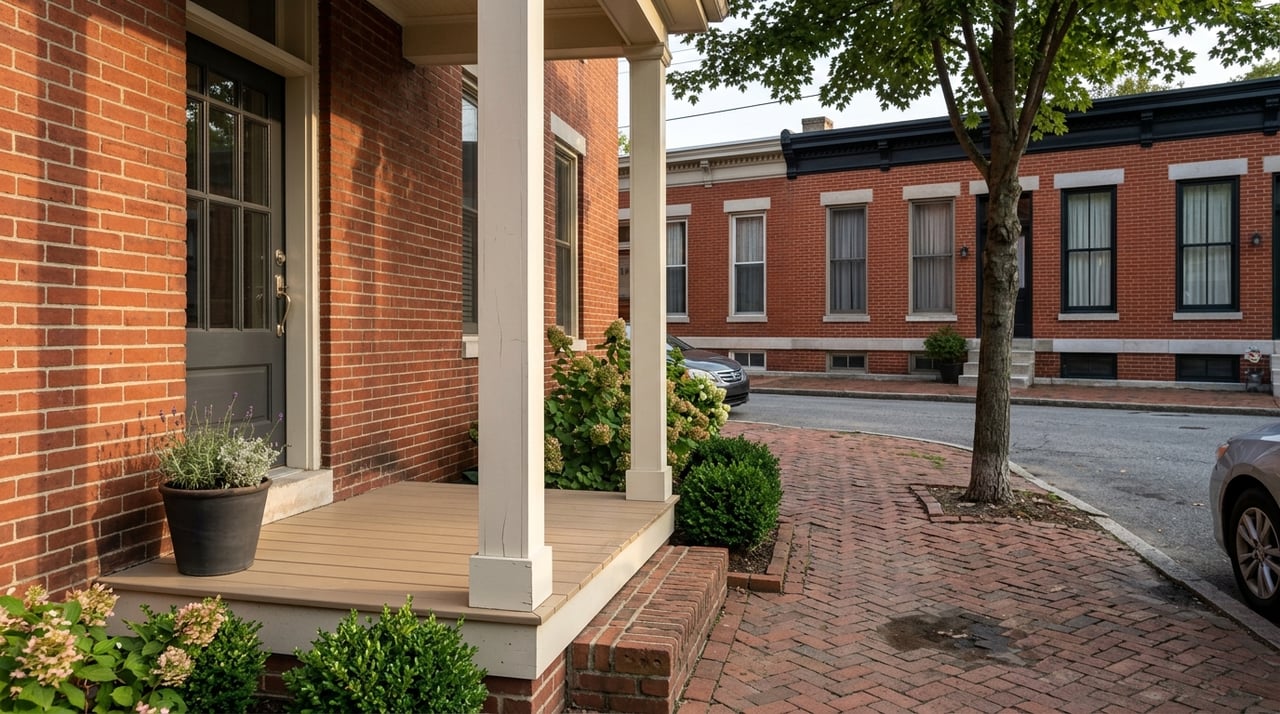
That means your options may look different from what you would see in more suburban parts of the county. In Lancaster, you are more likely to come across row-style homes, attached homes, and smaller multifamily properties. Detached homes exist, but they are less dominant in the city housing mix.
Lancaster housing costs by the numbers
Current Census figures show a median home value of $219,500. The same source lists median monthly owner costs at $1,510 with a mortgage and $660 without a mortgage, while median gross rent is $1,240.
Those numbers give you a helpful baseline, but they do not tell the whole story of block-to-block differences, property condition, or housing style. In a city with older housing stock and varied neighborhoods, the right fit often comes down to how you want to live day to day.
Historic homes and renovation questions
Historic preservation is a meaningful part of Lancaster’s housing story. The city says local historic districts use review rules for exterior alterations, demolition, and new construction.
For you, that means it is important to look beyond square footage and price alone. If you are interested in an older home, you may also want to understand what kinds of exterior changes are reviewed and how that could affect your renovation plans. That does not make historic homes a bad choice. It simply means doing your homework early.
Lancaster city versus the county
One of the biggest questions buyers have is whether Lancaster city or the surrounding county is a better fit. The answer usually comes down to lifestyle.
Lancaster city tends to offer a denser, more walkable, and more renter-heavy environment. Lancaster County overall has a much higher owner-occupied rate, which supports a more suburban or rural feel in many surrounding areas. If you want compact living and easy access to downtown culture, the city may feel right. If you want a less urban setting, you may prefer areas outside the city.
Who Lancaster may suit best
Lancaster can be a strong match if you want:
- A walkable small-city environment
- Access to arts, markets, and downtown events
- Transit options beyond just driving
- Housing with character and older architecture
- A location with both city amenities and regional access
It may require a closer look if your priority is:
- Large-lot detached suburban housing
- A newer-home setting
- Fewer considerations around historic review
- A more ownership-heavy suburban environment
Making a smart move in Lancaster
If you are thinking about buying in Lancaster, it helps to match the home to your routine, not just your budget. A charming rowhome near downtown may be ideal if you want walkability and culture close by. A property farther from the core may work better if you want a different pace or easier parking.
The key is understanding how culture, commute, and housing come together in real life. Lancaster offers a lot in a compact footprint, but the best choice depends on what matters most to you each day. If you want help comparing neighborhoods, property types, or your next move in Lancaster County, reach out to Joe Colon for a free consultation.
FAQs
Is Lancaster, PA a walkable place to live?
- Yes. The city’s comprehensive plan cites a Walk Score of 81 and says Lancaster’s compact layout and flat topography support short trips on foot and by bike.
What transportation options are available in Lancaster, PA?
- Lancaster residents can use bus, rail, trolley, taxi, and bike-share options. The city also has a downtown Amtrak station and access to major regional routes like 30, 283, and 222.
What types of homes are common in Lancaster city?
- Lancaster city housing leans toward attached single-family homes and smaller multifamily buildings, with fewer detached homes than more suburban areas.
How does Lancaster city compare with Lancaster County for housing style?
- Lancaster city generally feels more urban, denser, and more renter-heavy, while Lancaster County overall has a higher owner-occupied rate and often feels more suburban or rural.
What should buyers know about historic homes in Lancaster, PA?
- Buyers should know that some areas are affected by local historic-district review rules for exterior alterations, demolition, and new construction, so it is smart to ask questions early if you plan to update a property.
