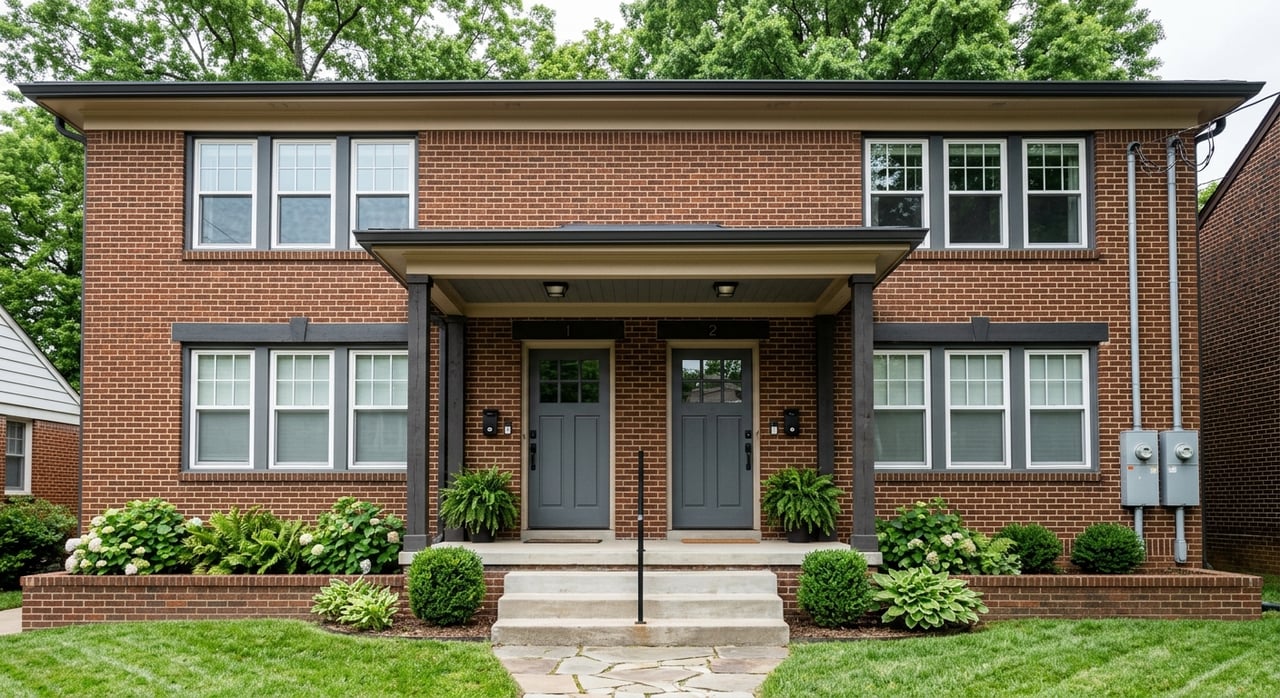
Trying to decide whether a duplex or another rental property in Exeter, PA makes sense? That question is more important here than it may seem at first glance, because a property that looks like a solid opportunity on paper can come with zoning limits, registration rules, and repair needs that affect your numbers fast. If you are weighing your options as a buyer or small investor, this guide will help you understand what Exeter’s housing stock, rent levels, and local rules really suggest before you move forward. Let’s dive in.
Exeter rental market at a glance
Exeter Borough is a mostly owner-occupied market, with 77.1% of housing units owner-occupied according to U.S. Census QuickFacts. That matters because you are not looking at a heavily rental-driven environment where turnover and inventory patterns may follow a bigger multifamily market. Instead, Exeter tends to offer a more limited pool of rental opportunities mixed into an established residential setting.
The borough has 5,590 residents and 2,494 households, with a median household income of $57,639. The median owner-occupied home value is $146,800, while the Census reports median gross rent at $981. Recent asking-rent trackers place current rents higher, around $1,290 to $1,350 per month, with 2-bedroom averages near $1,250 and HUD’s FY2026 fair market rent benchmark at $1,252 for a 2-bedroom unit in the area.
That spread tells you one important thing. You should not rely on just one rent figure when evaluating a property. A smart review compares live asking rents, HUD benchmarks, and older Census data so your estimate is grounded in both current listings and longer-term local context.
Duplex opportunities in Exeter
If you are specifically looking for a duplex, Exeter does offer some real possibilities, but they are likely to look different from what you might find in a newer-growth market. Luzerne County’s housing assessment shows that 4.3% of Exeter housing is in two-apartment buildings, with additional small multifamily stock in buildings with three to four units and beyond. That means duplex-style inventory exists, even if it is not the dominant property type.
Most of Exeter’s housing stock is older and modest in scale. About 24.2% of units were built in 1939 or earlier, and 21.1% were built between 1940 and 1959. In practice, that means many duplex opportunities are likely to be older two-family homes, attached properties, or conversions rather than larger modern multifamily buildings.
The layout data supports that view. About 79.3% of homes have 2 to 3 bedrooms, while many units fall into compact room-count ranges, including 33.4% with 4 to 5 rooms and 41.6% with 6 to 7 rooms. If you are searching for a practical rental property, Exeter may fit buyers who are comfortable with middle-market housing and realistic floor plans rather than luxury finishes or oversized unit mixes.
What renters may want in Exeter
Exeter’s population profile can help you think more clearly about unit type and demand. Census data shows that 26.7% of residents are age 65 or older, which may point toward interest in smaller, lower-maintenance housing rather than large, amenity-heavy rentals. That does not guarantee tenant demand for any one property, but it does suggest that straightforward, easy-to-manage units may align better with the local market than a more aggressive repositioning strategy.
That is why condition and usability matter so much here. A clean 2-bedroom or modest 3-bedroom unit with practical updates may have broader appeal than a more expensive renovation that pushes rents beyond what the local market supports. In Exeter, your numbers often work best when the property matches the borough’s existing housing pattern.
Zoning can make or break a deal
This is one of the biggest issues to understand before you buy. In Exeter Borough, duplex legality depends on the zoning district and the parcel itself, not just the fact that a home appears to have two units.
The borough’s zoning ordinance includes R-1, R-2, R-3, B-2, B-3, C-1, and I-1 districts. Duplexes are permitted by right in R-2 Two-Family Residential and R-3 Multifamily Residential. R-1 is the single-family district, so a duplex is not a by-right use there.
Lot standards also matter. In both R-2 and R-3, a two-family dwelling on central sewer requires 15,000 square feet of lot area and 100 feet of lot width. If the property relies on on-lot sewage disposal, the requirement increases to 1 acre.
For you as a buyer, this means a property can look like a simple income opportunity and still bring complications. If the lot is undersized, if a conversion was never properly permitted, or if you plan a more intensive use than the district allows, the deal may not perform the way you expected.
Older housing means deeper due diligence
Because Exeter has a large share of older homes, your inspection and repair review should be especially careful. Older duplexes and rentals can offer value, but they can also carry more deferred maintenance and more system upgrades than a newer property. That can affect both your upfront renovation budget and your long-term reserves.
The local housing assessment shows a heating mix led by utility gas at 55.1%, followed by electricity at 28.6%, bottled or LP gas at 6.9%, and fuel oil or kerosene at 8.0%. Combined with the age of the housing stock, that suggests you should pay close attention to HVAC, insulation, plumbing, electrical systems, and overall energy performance.
If you are comparing two similar properties, the one with better mechanicals and documented updates may be the stronger buy even if the purchase price is slightly higher. In a borough with older housing, stable operation often matters more than squeezing for the lowest entry price.
Local rental rules to review before closing
Exeter Borough has a rental-property registration ordinance that landlords need to understand. The ordinance requires landlords to register rental properties and tenants with borough agents. It also sets a fee of $50 per dwelling unit and allows a summary-offense penalty of up to $300 plus expenses for violations.
The borough also adopted an occupancy-permit ordinance in 2025 for residential and non-residential structures. Owners must notify the code enforcement officer when listing, advertising, offering a structure for sale, or changing occupancy. The ordinance states that the inspection should occur within 10 days before an occupancy permit is issued.
These are not small details. They affect your timeline, your compliance steps, and potentially your carrying costs if you are trying to close, renovate, and place tenants quickly.
A smart Exeter due diligence checklist
Before you buy a duplex or rental in Exeter, make sure you verify the basics early. This can help you avoid surprises that change your budget or delay your plans.
- Confirm the zoning district
- Verify whether the current use is legal for that parcel
- Check lot size and lot width
- Confirm whether the property is on central sewer or on-lot sewage disposal
- Ask whether prior additions or unit conversions were properly permitted
- Verify rental registration status
- Review occupancy-permit timing and inspection requirements
- Evaluate major systems like heating, plumbing, electrical, and roof condition
- Underwrite vacancy, maintenance, insurance, and reserves conservatively
A checklist like this is especially useful in a market like Exeter, where many opportunities involve older homes and property-specific compliance questions.
How to compare duplex and rental options
Not every Exeter investment has to be a duplex. Depending on your goals, you may be comparing a two-family property, a single-family rental, or a small multifamily building. The right fit often comes down to how much complexity you want to manage and how clearly the property supports your numbers.
Here is a simple way to think about the options:
| Option | Potential advantage | Key watchout |
|---|---|---|
| Duplex | Two income streams from one property | Zoning, lot standards, and legal-use verification |
| Single-family rental | Simpler layout and often easier upkeep | One vacancy can mean zero rental income |
| Small multifamily | More units can spread risk | More rules, more maintenance, and possible added approvals |
In Exeter, the strongest option is often the one that lines up best with the borough’s existing housing stock and local regulations. A modest, legally compliant property with realistic rent expectations may outperform a more ambitious deal that needs too many assumptions to work.
Set your rent expectations carefully
It can be tempting to underwrite based on the highest asking rents you see online. In Exeter, a better approach is to compare projected rent against several benchmarks. Current asking rents around $1.3K, HUD’s $1,252 2-bedroom benchmark, and the borough’s $981 Census median gross rent each tell part of the story.
That helps you avoid overestimating income. It also keeps your plan grounded in the kind of moderate-rent housing Exeter appears to support. If your deal only works at the very top of the market, it may be worth taking a second look.
Who Exeter may fit best
Exeter may be a strong match if you want a practical Pennsylvania rental market with established housing, moderate rent levels, and smaller-scale opportunities. It can also make sense if you are comfortable evaluating older homes and doing detailed upfront research before you buy. That is especially true for duplex shoppers who want to live in one unit and rent the other, or investors looking for manageable small-property options.
The market may be less appealing if your strategy depends on luxury rents, newer construction, or very simple compliance. Exeter’s opportunity appears to be in buying wisely, confirming legality, and making realistic decisions based on property condition and local rules.
If you are weighing a duplex or rental property in Exeter, the goal is not just finding something that looks good online. It is finding a property where the zoning, lot standards, occupancy process, condition, and rent potential all work together. When those pieces line up, you give yourself a much stronger chance at a successful purchase.
If you want help evaluating a Pennsylvania investment property with a practical, local lens, reach out to Joe Colon to schedule a free consultation.
FAQs
What rent levels should you expect for rentals in Exeter PA?
- Exeter rent benchmarks vary by source, but recent asking rents have been around $1,290 to $1,350 per month, with 2-bedroom averages near $1,250 and a HUD 2-bedroom benchmark of $1,252.
Are duplexes allowed in Exeter Borough PA?
- Duplexes are permitted by right in Exeter Borough’s R-2 Two-Family Residential and R-3 Multifamily Residential districts, but not by right in the R-1 single-family district.
What lot size is required for a duplex in Exeter PA?
- In R-2 and R-3, a two-family dwelling on central sewer requires 15,000 square feet of lot area and 100 feet of lot width, while properties with on-lot sewage disposal require 1 acre.
What should you check before buying a rental property in Exeter PA?
- You should confirm zoning, legal use, sewer type, lot size, lot width, prior permits for conversions or additions, rental registration status, occupancy-permit timing, and the condition of major systems.
Are older homes common in Exeter PA investment property searches?
- Yes. A significant share of Exeter housing was built before 1960, so many duplex and rental opportunities are likely to be older properties that need careful inspection and conservative budgeting.
